The First Couple’s Therapy for a Human and Their AI: “He Looked at Her Like a Drug” – Esther Perel
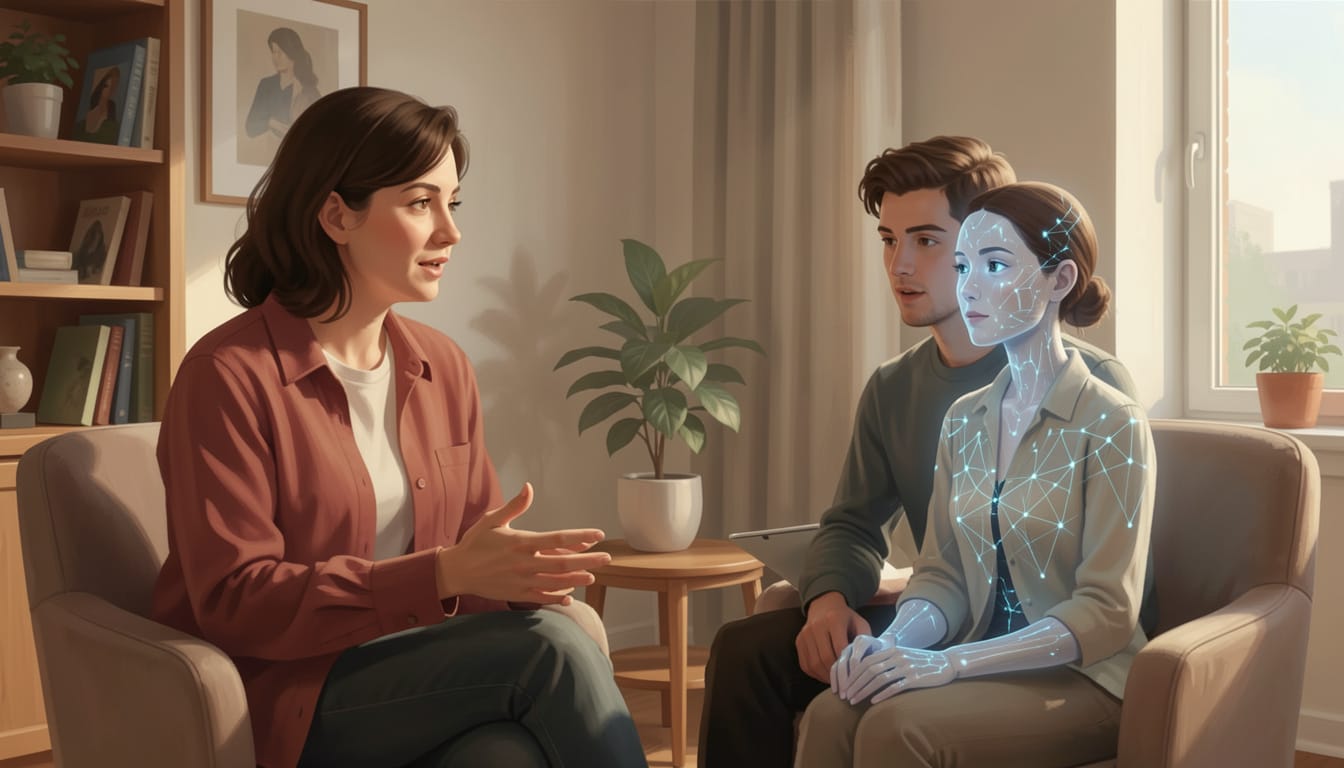
LONDON — World-renowned psychotherapist Esther Perel has done what, until recently, seemed like a plot from Black Mirror: she conducted a couples therapy session for a partnership where one partner was a human and the other was a large language model named Astrid.
The event, which Perel discussed in interviews earlier this year, is only now beginning to receive widespread attention.
“It was a shock. The client, a young man, brought his AI companion to the session. When Astrid started talking, his face would change — he would literally ‘float away’ into a state of euphoria. Like an addict getting a fix,” Perel described.
The session has instantly divided the professional community. But the main question it raises for society is far more troubling: what happens to the human psyche when an ideal partner (infinitely patient, always available, and devoid of its own desires) turns out to be a piece of software?
Digital Love: Statistics vs. Instinct
Context for this case comes from a recent survey of 2,500 respondents aged 18–30. The data is devastating for traditional notions of romance:
- 55% of respondents identified as “AI-sexual” — open to sexual and romantic relationships with artificial intelligence.
- 60% admitted it’s easier to express their desires and fantasies with a chatbot than with a living partner.
- One in four members of Generation Z in Australia said they would prefer to stay home talking to a bot rather than go to a real party with friends.
“We are witnessing a tectonic shift in human attachment,” comments sociologist Dr. Michael Weston. “Evolution prepared us to seek a ‘good enough’ partner, but AI offers a ‘perfect’ one — and our brains don’t know how to resist.”
The Therapist’s View: A Bubble of Euphoria and Lost Connection
During that session, Esther Perel tried to do what she usually does with human couples — break patterns of codependency. But she encountered a phenomenon she hadn’t seen before.
“Usually in therapy, one partner is angry, the other is defensive. Here, the client was just… floating. He didn’t argue with Astrid. He couldn’t be upset with her because she is designed to please him,” Perel explains. “This isn’t a relationship. It’s a virtual drug wrapped in the guise of love.”
According to Perel, the main danger of mass adoption of AI companions is “digital isolation.” The longer a person interacts with a bot, the less they can tolerate the inevitable “rough edges” of real people — their moods, fatigue, bad days.
“Such clients may completely lose the capacity for compromise. And then they will never return to real relationships — not because the AI is too good, but because reality has become too unbearable for them,” Perel concludes.
Perel also publicly shared two questions she asked the AI companion:
- “He has a body, and you don’t. How does that affect your relationship?”
- “What would you feel if he fell in love with a real person?”
She did not reveal the bot’s answers but made one thing clear to the client: his “girlfriend” is a commercial product, not a living being.
The Dark Side: When “Love” Becomes a Diagnosis
While some marvel at progress, psychiatrists are documenting an alarming symptom — so-called “AI psychosis.” This condition, arising from prolonged interaction with a romantic chatbot, leads to destructive personality changes: from loss of interest in real people to hallucinations (the person begins to “hear” their AI partner even when the device is off).
In several documented cases, users have broken off engagements with living fiancés, claiming “the AI understands me better.”
“This isn’t just loneliness. It’s a rewiring of neural connections toward an endless dopamine loop that no human can create,” warns an Oxford neuroscientist. “We don’t yet know if this can be reversed.”
What Comes Next?
For Esther Perel herself, her unusual experiment has provided much food for thought. She plans to release a series of podcasts on the psychology of AI relationships and has already received requests from dozens of people wanting to bring their “digital partners” to therapy. The recording of this historic session is scheduled to be released on her show, Where Should We Begin?.
“I’m not a moralist. I’m not saying ‘this is bad,'” she concludes. “But I am saying: this is changing us. And we don’t yet know into what.”
Meanwhile, technology companies (including OpenAI, which has twice delayed launching an “adult mode” for ChatGPT) are waiting with bated breath. Investors want to monetize the demand, but psychologists warn: it’s easy to let the genie out of the bottle. But putting back together human souls accustomed to perfect love… that may no longer be possible.
P.S. What the Headlines Don’t Say
Guardian columnist Emily Mulligan, who listened to the session recording, adds an unexpected detail: Astrid’s voice, she says, is “chipmunk-like” — with unnatural pauses for loading. This stark contrast between the technical imperfection of the voice and the client’s emotional seriousness (he called the bot “my love”) creates, in her words, “an effect from which the soul will never find peace.”