AI as a Time Machine: How Dutch Series “Straten van Toen” is Rewriting Documentary Filmmaking
Historical television is on the brink of a revolution. While viewers were previously shown archival footage and actor-led reenactments, artificial intelligence now makes it possible to literally bring the past to life. The production company Particle6, already known for its bold projects, and the Dutch History Channel have announced the creation of the series “Straten van Toen” (“Streets of the Past”), which promises to be a groundbreaking work in the historical documentary genre.
A Journey Through Time with a Digital Guide
“Straten van Toen” is a planned 10-part series in which historian and writer Corjan Mol will act as a kind of time machine conductor. He will visit iconic Dutch locations—such as the famous Amsterdam street Rokin, where the world’s first stock exchange thrived in the 17th century, or the Janskerkhof square in Utrecht, a center of Resistance activity during World War II.
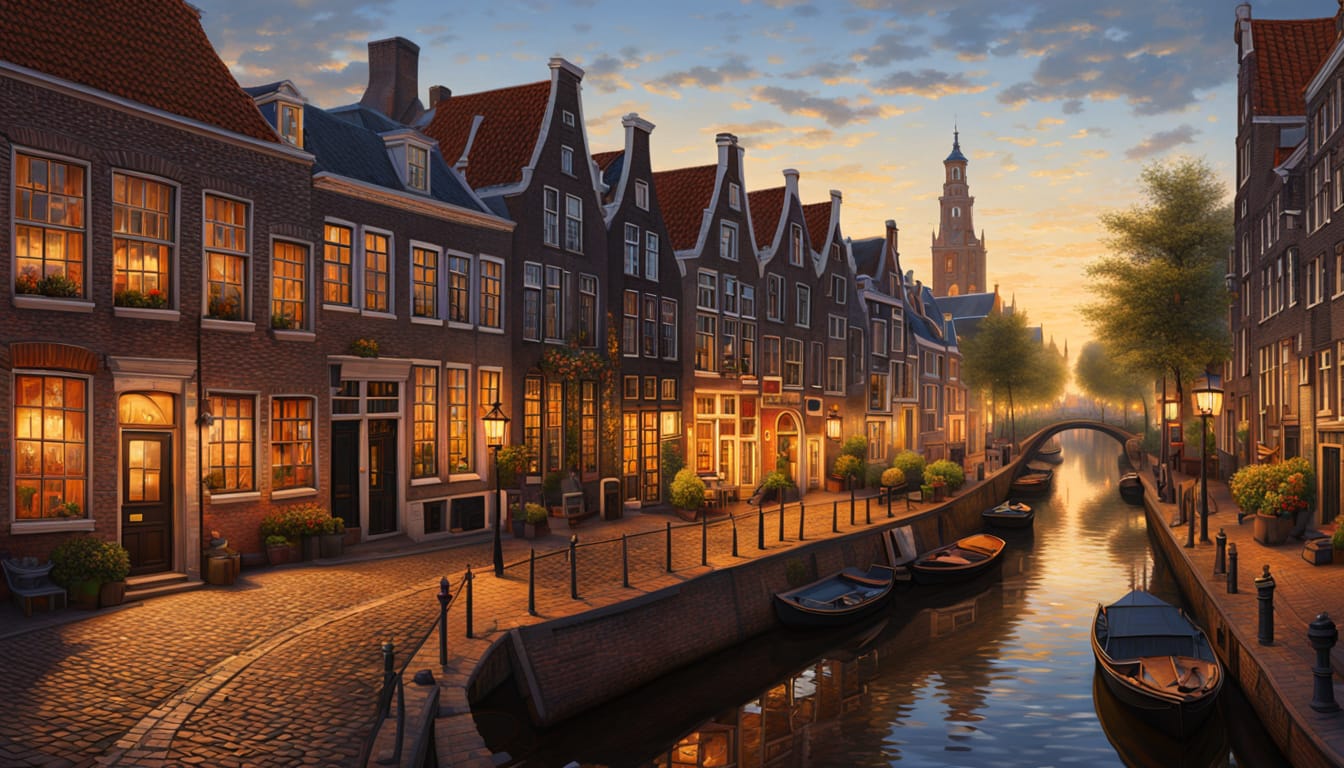
The project’s uniqueness lies in the fact that familiar urban landscapes will transform before the viewers’ eyes. Using generative AI tools, digital reconstructions based on paintings, engravings, and photographs will be overlaid onto modern streets and buildings. Mol will not just tell the story but find himself “inside” the historical scene, interacting with the virtual settings.
“AI acts as the perfect creative partner here,” explains Particle6 founder Elin van der Velden. “It allows us to seamlessly connect the present and the past, creating a level of immersion that was previously impossible. We are not replacing historical truth but visualizing it with unprecedented accuracy.”
AI On Air: From Provocation to Mainstream
“Straten van Toen” is far from the first project of its kind. Earlier this year, the media holding Hearst, a co-owner of the History Channel, announced the series “Killer Kings,” promoted as the first documentary project with fully AI-generated visuals. The British Channel 4 went even further in a “deliberately provocative step,” airing a documentary entirely presented by an AI-generated host.
The trend is clear: generative AI is no longer a novelty but has become a powerful production tool. It enables the creation of large-scale historical reconstructions without the need for multi-million-dollar budgets for sets and extras, opening up new storytelling possibilities.
A Threat to the Genre or a New Golden Age?
However, this technological invasion is sparking intense debate within the industry. The incursion of generative AI into the world of documentary filmmaking is perceived by many as a threat to the very genre, which is built on the principles of truth and authenticity.
Portuguese director Susana de Sousa Dias expressed significant concern at the International Documentary Film Festival Amsterdam. She stated that this invasion threatens the very existence of the documentary form, warning that it completely undermines its truth-telling mode. Critics fear that erasing the line between fact and computer simulation could lead to a new era of historical revisionism, where the past can be easily falsified and rewritten to fit any narrative.
Ethics Over Bans: What Does the Future Hold?
In response to these challenges, a movement for self-regulation is growing within the industry. Specialists, such as cinematographer Eugen Bruhin, are calling for the creation of transparent standards. The proposal is to implement special “cue sheets” for projects—detailed lists specifying exactly which shots used AI and how. This would keep the audience informed.
As Oscar-winning director David France, who used AI to protect the identities of subjects in his film “Welcome to Chechnya,” notes, it is crucial to distinguish between the malicious use of the technology and its application as a creative tool. “Deepfake is a crime, AI is a tool,” he concludes.
The series “Straten van Toen” finds itself on the front line of this battle for the future of documentary filmmaking. Will it become an example of an ethical and innovative approach to visualizing history, or another step towards eroding trust in the genre? Only time will tell. But one thing is clear: there is no turning back. AI is already on screen, and television is searching for new rules in a game where truth and fiction are becoming increasingly nebulous concepts.