
Bristol’s ‘Smart Cinema’ Measures Your Brain and Heartbeat to Test Films
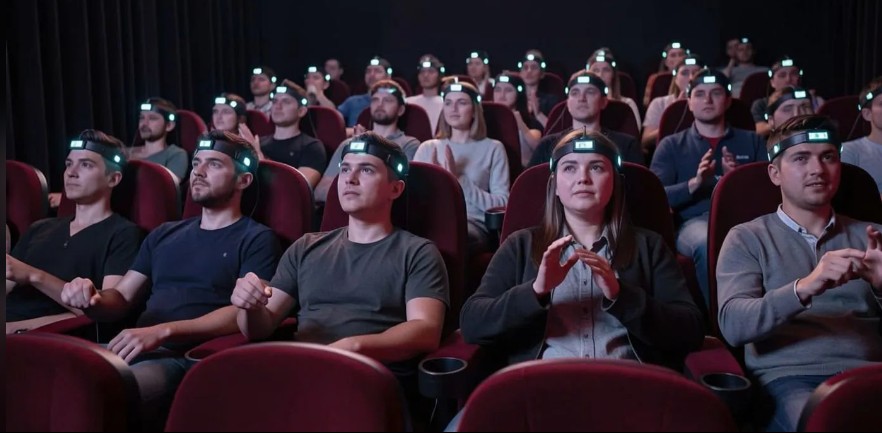
The University of Bristol has launched what is being called a ‘Smart Cinema’ — a research lab that monitors viewers’ real-time physiological reactions to films, and the first test screenings took place just three days ago, on April 22–23, 2026. Located on the Temple Quarter Enterprise Campus within the MyWorld innovation hub at The Sheds, the 35-seat cinema is equipped with a 4K laser projector, Dolby surround sound, EEG headsets to register brain activity, pulse oximeters, infrared cameras to track movement and blinking, and sensors measuring skin conductance for emotional response.
During a screening, researchers do not look at individual reactions but at synchronisation — the moments when the heart rates, brain activity and movements of the entire audience align. According to neuropsychologist Professor Iain Gilchrist, this indicates the highest level of immersion and engagement with the story. “These technologies can give creative people the ability to experiment, to try new things, to be bolder,” Gilchrist said.
The first film tested in the Smart Cinema was RENO, a science-fiction short drama directed by Rob Hifle from Lux Aeterna, the studio behind Squid Game: The Challenge and The Crown. The film explores trust and manipulation in the age of advanced technology and artificial intelligence, and was shot on a virtual studio using Unreal Engine, Sony Venice 2 cameras and Vicon motion capture. Interestingly, AI was used for scene planning and storyboarding, but the studio deliberately limited its role to keep human control over the final product.
On April 22–23, about 200 viewers watched one of two different edits of RENO, which the director had prepared specifically for the experiment. The two versions differ, among other things, in the screen time given to a central character. “It will be very interesting to see how the audience engages with the characters and whether the story points are placed correctly,” Hifle said. “This will help understand whether the film sinks or swims.”
The goals of the project are threefold: to improve storytelling by identifying which scenes truly hold attention, to reduce risk for studios and streamers who often avoid original ideas because they cannot predict audience response, and to give directors an objective tool alongside their own vision. “This is not about telling the director what to do,” the team emphasised, “but about giving another tool in their toolkit to understand what might work and what might not.”
Looking ahead, the Bristol researchers plan to launch a commercial spin-off in autumn 2026, offering the Smart Cinema’s services to film studios, advertising agencies and other media. The technology is also expected to be adapted for live concerts, theatre performances and even university lectures.