Scientists Develop Ultra-Thin Wireless Brain Implant with 100x Faster Data Speed than Neuralink
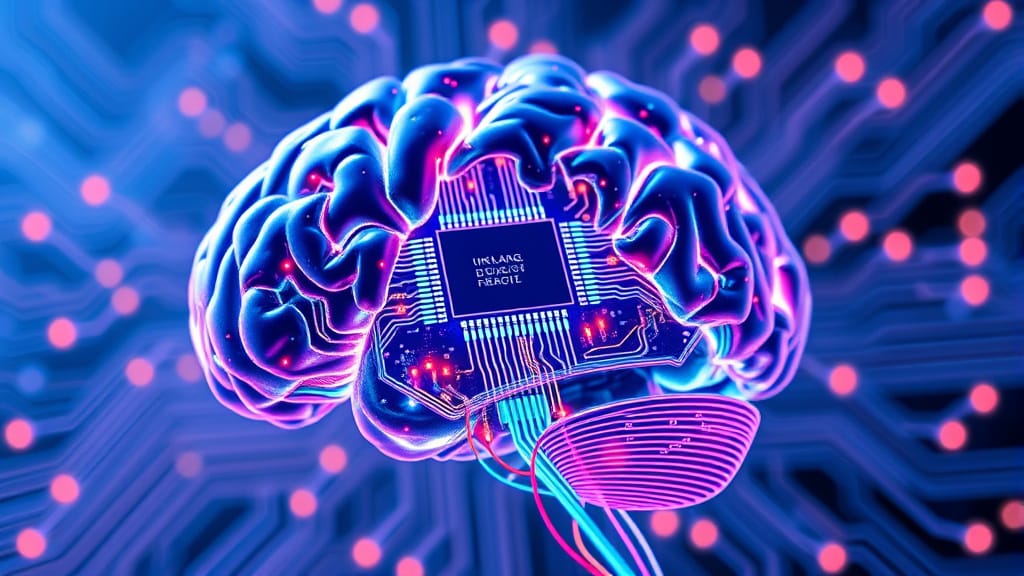
Researchers from Columbia University, Stanford, and the University of Pennsylvania have developed an ultra-thin brain-computer interface (BCI) named BISC. This wireless device, as thin as a human hair, rests on the surface of the brain without penetrating its tissue and transmits data at 100 Mbps—100 times faster than Neuralink’s system.
BISC boasts a density of 65,536 electrodes, which is 64 times greater than Neuralink’s 1,024. The entire implant occupies a mere 3 mm³, making it a thousand times smaller than conventional BCIs with their bulky external electronics. “The implant is so thin it can slip between the brain and the skull, resting on the brain like a piece of damp tissue paper,” explains Professor Ken Shepard of Columbia University.
BISC is a single, integrated CMOS chip just 50 micrometers thick. It consolidates 1,024 recording channels, 16,384 stimulation channels, a radio transmitter, and power management. Outside the body, the patient wears a compact relay unit that powers the implant and exchanges data with it. Its high bandwidth enables real-time transmission of brain signals to AI models for decoding movements, speech, and intentions.
The development, supported by DARPA and involving the three universities and NewYork-Presbyterian Hospital, took several years. For commercialization, the startup Kampto Neurotech was launched. The technology has already undergone pre-clinical trials on primates, demonstrating stable operation for up to two months, and is being tested on patients during intraoperative recordings. The team has also received an NIH grant to explore BISC’s use in treating drug-resistant epilepsy.
Potential applications include controlling epileptic seizures, restoring movement in cases of paralysis and spinal cord injuries, returning speech to ALS patients, and potentially restoring vision in the future. “BISC transforms the cortical surface into a portal for high-speed, bidirectional communication with AI,” says Stanford Professor Andreas Tolias.