The End of the Digital Double Era: The Oscars Declare War on Generative AI
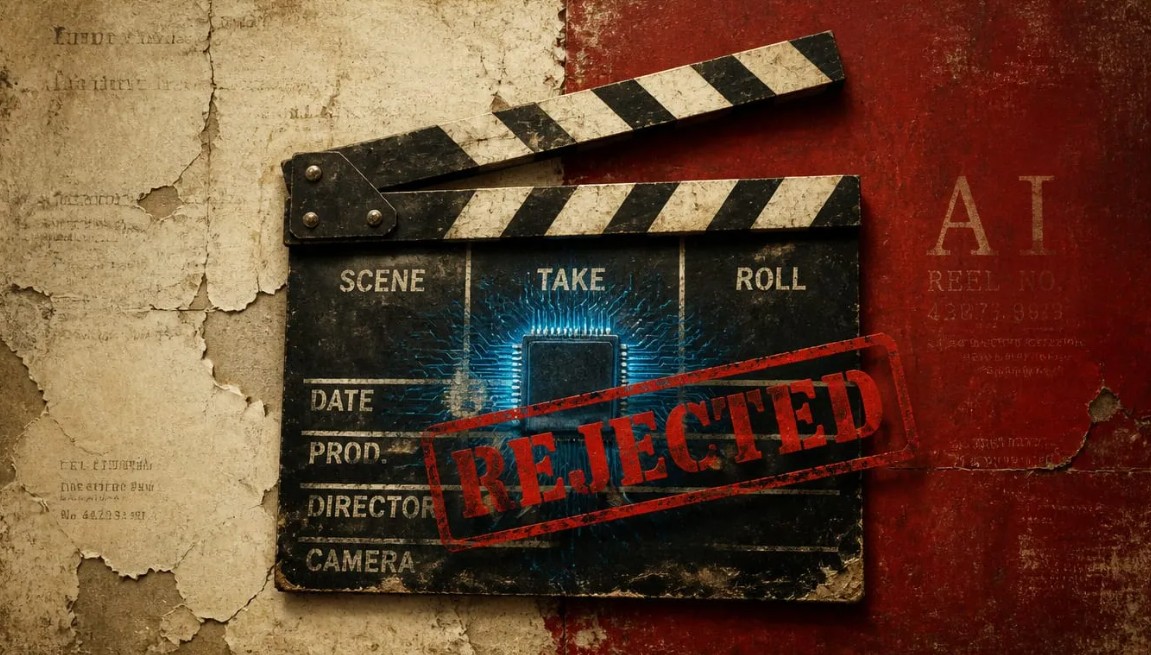
On Friday, the organization behind the Oscars released new rules, including several provisions regarding the use of generative artificial intelligence. The Academy of Motion Picture Arts and Sciences (AMPAS) has introduced clarity on an issue that has troubled Hollywood for the past two years: where is the line between technological progress and the devaluation of human labor?
The core message of the new regulations is crystal clear: the Oscars will remain a celebration of people, not algorithms.“Only Humans in the Credits”
The most stringent changes affect the acting and writing categories.
According to the new regulations, only performances “listed in the film’s credits and explicitly performed by humans with their consent” will be eligible for Oscar nominations for Best Actor and Best Actress.
This is a direct response to the growing popularity of deepfake technology and digital replicas. The phrase “with their consent” closes a loophole for the posthumous “resurrection” of actors or the use of their likenesses without permission — recall recent scandals involving digital versions of deceased stars.
A similar requirement applies to screenwriters: the screenplay must be “written by humans.” Projects where key dialogues or plot twists are generated by neural networks like ChatGPT will be shut out of the nominations.The Right to Inspect
The Academy has reserved an important option for itself: organizers may request additional information from studios regarding the use of AI in a film, as well as the extent of “human involvement in its creation.”
This means producers will now have to keep internal documentation for every frame processed by a neural network. Submitting an Oscar application will carry an implicit obligation to disclose the “digital kitchen.”Context: Why Now?
The new rules are not a whim of cinema conservatives, but a necessary measure in response to the rapid encroachment of AI into the industry. The Academy cites several triggers:
- The independent film featuring “Val Kilmer” — referring to technologies that allow creating versions of an actor at any age or even replacing their face without the actor’s physical participation.
- Tilly Norwood — an “actress” entirely generated by artificial intelligence. Her existence raises the question: can pixels compete for a statuette if no one actually performed the role?
- Filmmaker despair — new AI video models (capable of generating moving images from text prompts) have prompted, as the Academy put it, “loud statements of despair” from some professionals.
Echoes of the Great Strike
It should not be forgotten that artificial intelligence was one of the key stumbling blocks during the historic strikes of screenwriters (WGA) and actors (SAG-AFTRA) in 2023. Actors demanded guarantees that studios could not scan their faces for perpetual use in digital replicas for a one-time fee.
The new Oscar rules represent a victory for union demands, formalized in the statute of the film industry’s highest honor.Beyond Hollywood: The Wave Reaches Literature
The Academy emphasizes that it is moving in step with a global trend. The literary world serves as an example. A telling symptom of the new era is the case of the horror novel “Shy Girl” by author Mia Ballard. The book, which had already secured a contract with the publishing giant Hachette, was pulled from sale after readers suspected the text was generated by a neural network. Ballard denied direct use of AI, claiming that an unscrupulous editor had “improved” her text with an algorithm — but the status of the “first recalled AI novel” has already been etched into history.
Other writers’ associations have officially stated that texts created with the help of neural networks (even partially) are ineligible for professional awards. What Does This Mean for the Future of Cinema?
The new rules do not prohibit using AI as a tool (for example, for retouching, intermediate background generation, or storyboard assistance). What is prohibited is the substitution of the creative subject.
The Academy has effectively introduced a “human-origin quality mark.” This could lead to a division of films into two camps: “Oscar cinema” (with minimal AI) and experimental digital content, which will now have little chance of reaching the industry’s main stage.
The Verdict: The Oscars choose the human. Only if the credits list a living name, the actor has a pulse, and the screenplay is written with blood and sleepless nights (rather than a prompt in a dialogue box) does a film have a chance to win the coveted statuette. Digital doubles and generative algorithms are left behind.